

Exterior Render Systems Australia — Complete Wall Solutions for Every Project
Australian construction demands exterior render systems that perform under real conditions — intense UV, coastal salt air, temperature extremes, bushfire risk, and tightening energy efficiency standards. Whether you are building a new home, delivering a multi-unit residential development, or finishing a commercial facade, the exterior render system you specify determines how your walls will look, last, and comply with the National Construction Code.
Unitex has been manufacturing exterior render systems in Australia for over 40 years from its facility in Dandenong South, Victoria. The range covers every stage of a rendered exterior wall — from lightweight wall cladding systems and acrylic base coat renders through to decorative textures and finishes, architectural mouldings and columns, protective coatings, and a full range of render accessories and tools. Every product is designed, tested, and manufactured for Australian conditions and Australian building codes.
- Display 19 Products per page
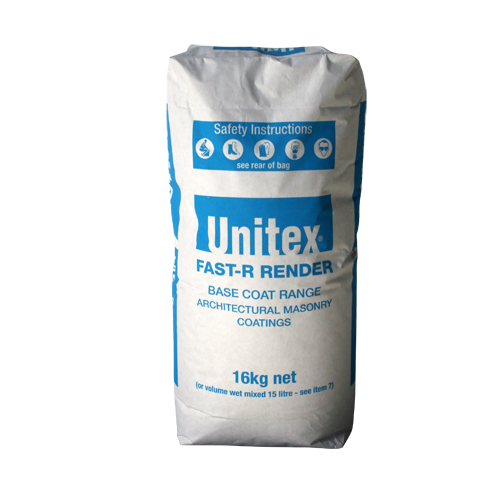
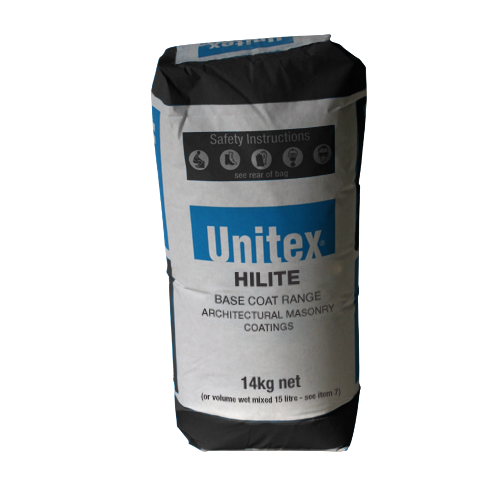
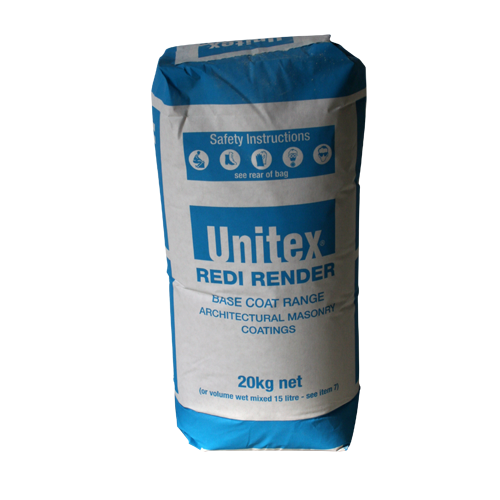
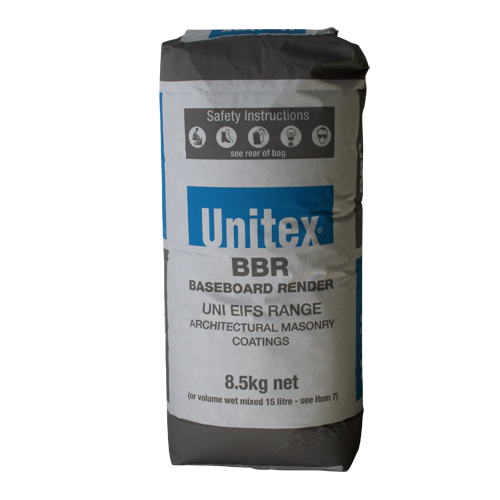

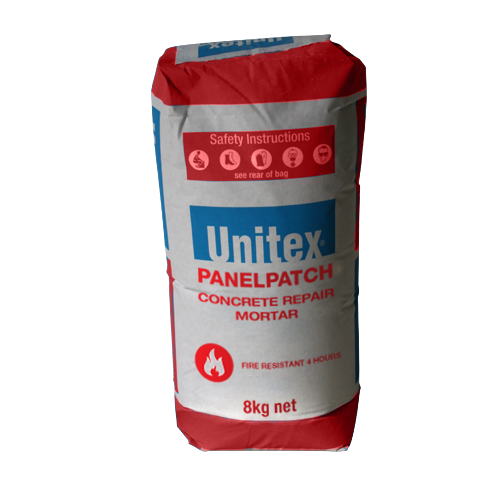

This page provides a comprehensive overview of the exterior render system categories available, how they work together as integrated systems, and how to access expert support and supply across Australia.
What Is an Exterior Render System?
An exterior render system is the complete assembly of materials that creates a finished, protected, and insulated exterior wall surface. Rather than a single product applied in isolation, an exterior render system combines multiple layers — each with a specific function — that work together as an integrated whole.
A typical exterior render system in Australia includes substrate preparation (primers and sealers matched to the wall surface), a base coat render (the structural render layer applied over brickwork, blockwork, AAC panels, fibre cement sheeting, or an EIFS cladding board), reinforcing mesh where required, a decorative finish coat (trowel-on or roll-on acrylic texture), and a protective sealer or top coat to extend the life and appearance of the finished wall.
The critical point is that each layer must be compatible with the next. Using a base coat render formulated for one substrate on a different substrate, or applying an incompatible texture over a mismatched render, creates risks of cracking, delamination, and premature failure. This is why specifying a complete, tested exterior render system — rather than assembling individual products from different sources — matters for both performance and compliance.
For substrate-specific system specifications showing the correct product combinations for each wall type, visit the system specifications resource on the Unitex website.
Base Coat Renders — The Foundation of Every Exterior Render System
Base coat renders are the foundation layer of any exterior render system. Applied directly over the prepared substrate, the base coat provides the structural render surface that bonds to the wall, creates a true and level plane, and accepts the decorative finish coat.
Australian exterior render systems use two primary base coat types: acrylic polymer renders and non-combustible cement-based renders. The right choice depends on the substrate, the project’s compliance requirements, and the desired finish.
Acrylic polymer renders — available in both wet (pre-mixed) and dry (bag) formats — are the workhorse of residential and commercial rendering across Australia. Their polymer-modified formulation provides superior adhesion, flexibility, and crack resistance compared to traditional sand-and-cement renders. They are suitable for application over clean brickwork, deeply raked brickwork, concrete blockwork, AAC panels, fibre cement sheeting, and baseboard cladding panels.
Non-combustible renders are specifically formulated for projects where fire compliance is a requirement — including multi-storey applications and projects in bushfire-prone areas. These renders meet AS 1530.1 non-combustibility standards and are an essential component of compliant facade systems for Class 2–9 buildings.
For projects on clean brickwork, blockwork, and AAC panels, Unitex has recently introduced Aero Render — a single-coat application product designed for ease of use across all skill levels. It represents the latest development in simplifying the rendering process without compromising performance.
The full base coat render range — including product data sheets and substrate suitability guides — is available on the Unitex website.
EIFS Lightweight Cladding — Australia’s Most Energy-Efficient Exterior Render System
External Insulation and Finish Systems (EIFS) represent a fundamentally different approach to exterior wall construction compared to traditional brick veneer or rendered blockwork. Rather than building a heavy masonry wall and then rendering over it, an EIFS cladding system combines structural cladding, insulation, and a pre-applied render surface into a single lightweight panel that is fixed directly to the building frame.
The Uni-Base Board system — Australia’s leading EIFS cladding system — uses EPS (Expanded Polystyrene) insulation panels with a factory-applied polymer render coating and alkali-resistant fibreglass mesh reinforcement. The panels arrive on site pre-coated and ready for installation, reducing on-site variability and ensuring consistent quality across every panel.
This approach delivers several practical advantages for builders and developers. The system is significantly lighter than brick veneer, reducing scaffold loads, structural framing requirements, and foundation costs. Installation is faster than traditional masonry, compressing construction timelines. And the integrated EPS insulation core delivers high R-value thermal performance — approximately 400% more energy efficient than rendered brick veneer at a similar or lower cost point — directly addressing the tightening NatHERS and NCC energy efficiency requirements that every new Australian home must now meet.
EIFS cladding systems are available in both cavity and non-cavity configurations, as well as BAL 29 and BAL 40 bushfire-rated versions for projects in designated bushfire-prone areas. All systems hold CodeMark certification — the ABCB’s deemed-to-satisfy product certification scheme — meaning they are accepted as compliant with the Building Code of Australia without requiring individual engineering assessments on each project. This removes a significant compliance burden for builders, designers, and building surveyors.
For the full range of lightweight wall cladding systems, including cavity, non-cavity, and BAL-rated options, visit the Unitex cladding product range.
Textures, Finishes and Decorative Systems
The texture and finish coat is what people actually see — the final decorative surface that defines the look and character of a rendered facade. Australian exterior render systems offer a wide range of finish options, from fine smooth renders and polished concrete effects through to coarser trowel-on and roll-on acrylic textures.
Trowel-on textures are applied by hand using a plastic float, giving the applicator control over the pattern, depth, and character of the finish. Roll-on textures use a roller for faster application and a more uniform result, making them well suited to large facade areas and commercial projects. Polished concrete finishes create a smooth, contemporary look that has become increasingly popular in modern residential and commercial architecture.
The choice of texture interacts with the base coat render beneath it — different textures require different render preparation, surface smoothness, and primer systems. This is another reason why specifying a complete, compatible exterior render system matters. The right combination of base coat, primer, and finish coat ensures adhesion, colour consistency, and long-term durability.
A protective top coat or sealer applied over the finished texture extends the life of the coating system by providing water repellency, UV resistance, and protection against staining and environmental contaminants. This final layer is a frequently overlooked but important component of a complete exterior render system.
Explore the full range of textures and finishes on the Unitex website, including trowel-on, roll-on, polished concrete, and bagging finishes.
Architectural Profiles, Mouldings and Columns
Exterior render systems extend beyond flat wall surfaces. Architectural profiles, mouldings, and columns add design depth, character, and presence to residential and commercial facades — and in Australia, lightweight EPS-based architectural elements have largely replaced heavy concrete and plaster alternatives.
The Uni-Shape range covers a comprehensive catalogue of architectural elements including window architraves, sills, keystones, columns and column sets, balusters, corbels, dentil mouldings, parapets, stringers, quoins, and fence capping. All are manufactured from lightweight EPS with a pre-applied rendered surface, making them significantly lighter and faster to install than traditional solid alternatives.
For projects requiring custom profiles — unique curves, heritage replication, or architect-specified details — the Unitex team includes dedicated CAD draftsmen and moulding specialists who can design and manufacture bespoke profiles to match any brief. This capability has been demonstrated on projects ranging from heritage hotel restorations through to complex religious architecture and contemporary residential developments.
View the full range of architectural mouldings and columns on the Unitex website, including standard profiles and information on custom design options.
Accreditations and Compliance — Why It Matters for Exterior Render Systems
Specifying an exterior render system in Australia is not just a product selection exercise — it is a compliance decision. The National Construction Code (NCC), state building authorities, and bushfire regulations all impose requirements on exterior wall systems that must be met before a building can be approved.
The most important accreditation for cladding and render systems in Australia is CodeMark certification. CodeMark is the ABCB’s product certification scheme: a CodeMark-certified system is deemed to satisfy the relevant provisions of the Building Code of Australia. This means builders, specifiers, and building surveyors can accept the system without commissioning individual engineering assessments, fire tests, or structural reviews for each project.
Beyond CodeMark, independently verified BRANZ appraisals and BRAC (Building Regulations Advisory Committee) certificates provide additional layers of third-party confidence. For projects in bushfire-prone areas, BAL 29 and BAL 40 certifications confirm that the cladding system has been tested to the relevant Bushfire Attack Levels under AS 3959.
Not all exterior render and cladding systems on the Australian market carry this depth of accreditation. Some are partially certified, others rely on individual engineering assessments (which add time and cost to every project), and others have no third-party certification at all. The accreditation depth of your specified exterior render system directly affects compliance confidence, approval timelines, and long-term liability.
For current certification details, visit the frequently asked questions and system specifications pages on the Unitex website.
Exterior Render Systems for Every Substrate
Different substrates require different exterior render system approaches. A render system designed for clean brickwork will not perform correctly on painted brickwork or fibre cement sheeting — the primer, base coat, mesh reinforcement, and application method all change depending on the wall surface.
Common substrates for rendered exterior walls in Australian construction include clean brickwork, deeply raked brickwork, painted brickwork, AAC (Autoclaved Aerated Concrete) panels, concrete blockwork, fibre cement sheeting, and EPS baseboard cladding panels. Each substrate has specific preparation requirements — surface cleaning, priming, mechanical keying, and moisture management — before any render is applied.
Getting the substrate preparation right is one of the most critical steps in the entire exterior render system. Render failures in Australia are more commonly caused by incorrect substrate preparation than by product defects. Using a system that has been tested and specified for the exact substrate on your project — and following the manufacturer’s application manual — is the best protection against cracking, delamination, and warranty issues.
Detailed substrate-by-substrate system specifications, including product combinations, application methods, and downloadable application manuals, are available on the Unitex website.
Exterior Render Systems Across Australia — Supply, Support and Access
Exterior render systems are available across Australia through a combination of trade outlet locations and a national stockist network.
Unitex Render Warehouse (URW) operates dedicated trade outlet locations in Oakleigh South (Victoria), Seven Hills (Sydney), and Dry Creek (Adelaide) — all opening early to suit trade schedules. These outlets stock the complete product range and are staffed by technical sales professionals with hands-on building and rendering knowledge.
Beyond the trade outlets, Unitex products are available through a national network of stockists — ensuring access in regional areas and states beyond the three URW locations. Use the stockist finder to locate your nearest supply point.
One of the most valued aspects of the Unitex service model is the availability of Technical Sales Representatives who attend site throughout the project. This is not a point-of-sale service that disappears after the order is placed — it is ongoing technical support from project conception through to completion, including site inspections, installation guidance, and specification advice.
For projects at the planning stage, the free Plan Quote Service provides a detailed quotation from your elevation and floor plans — giving you accurate material quantities and costs before you commit. You can also request a quote online for any render system requirement.
Frequently Asked Questions About Exterior Render Systems
How does the cost of an EIFS cladding system compare to brick veneer?
EIFS lightweight cladding systems generally cost similar to or less than rendered brick veneer, while delivering significantly higher thermal performance — approximately 400% greater energy efficiency. When factoring in reduced scaffold loads, faster installation, and easier compliance with NCC energy requirements, the total project cost comparison often favours lightweight cladding. For a detailed cost comparison for your project, use the Plan Quote Service.
Do exterior render systems need experienced trades to install?
Yes. Render and cladding systems should be installed by experienced trade professionals to ensure correct application and warranty eligibility. Unitex can arrange referrals to accredited applicators and provides on-site Technical Sales Representative support throughout the installation.
What if the building moves and the render cracks?
Minor frame movement is normal in Australian construction. Proper installation of expansion joints around the perimeter and at key stress points manages this movement and prevents cracking. In the event that cracking does occur, Unitex provides repair guidance and technical support. Visit the frequently asked questions page for more detail.
How quickly can exterior render systems be delivered?
Orders within Victoria are generally delivered within 48 hours. NSW and other states, including stockist orders, are generally delivered within 5 working days.
Get Started — Talk to the Exterior Render System Experts
Whether you are specifying an exterior render system for a new residential project, a commercial facade, or a renovation, the right system starts with the right advice.
Call 1800 RENDER (1800 736 337) to speak with the technical sales team, submit your plans for a free quotation through the Plan Quote Service, or request a quote online. You can also visit your nearest URW trade outlet for walk-in service and expert guidance — find locations and contact details on the contact page.
For the full product range, technical data sheets, application manuals, and system specifications, visit unitex.com.au.