

Acrylic Render Systems for Australian Projects
Acrylic render is the base coat layer that defines the performance and longevity of any exterior rendered wall. Getting the render system right — the right formulation for the substrate, the right application method for the conditions, and the right compatibility with the finish coat — is what separates a wall that looks and performs well for decades from one that cracks, debonds, or fails prematurely.
This page covers what acrylic render systems are, how they work across different substrates, and what to consider when specifying a render system for an Australian project. For full product specifications, coverage rates, and technical data sheets, visit the acrylic render range on unitex.com.au.
- Sort by Popularity (sales)
- Display 19 Products per page


What Is an Acrylic Render System?
An acrylic render system is a multi-component exterior wall treatment built around an acrylic polymer base coat render. The acrylic polymer binder gives the render flexibility, adhesion, and weather resistance that traditional cement renders cannot match — making it the standard specification for modern Australian residential and commercial construction.
A complete acrylic render system typically includes a primer or sealer matched to the substrate, a base coat acrylic render applied in one or two coats depending on the surface condition and system requirements, a reinforcing fibreglass mesh where required, and a decorative finish coat — an acrylic texture, polished concrete finish, or bagging compound — applied over the cured base coat.
The compatibility between each layer in the system matters significantly. Applying a finish coat over an incompatible base coat, or using a base coat not suited to the substrate, creates adhesion failure risk. For this reason, specifying a complete system from a single manufacturer — with tested compatibility across all layers — is the reliable approach for any render project.
Matching the Render to the Substrate
The single most important variable in acrylic render specification is the substrate — the wall surface the render is being applied to. Different substrates have different porosity, surface texture, and structural movement characteristics that determine which render formulation is appropriate.
Clean brickwork is a common substrate on new residential builds and additions. A standard acrylic polymer render applied directly to the brick face — with appropriate surface preparation and, where required, a bonding primer — delivers a strong, durable base for texture finishes. Deeply raked brickwork or rougher surfaces may require a modified approach to fill the joint profile.
Painted brickwork requires a different approach. The existing paint layer changes the substrate’s porosity and adhesion profile. Surface testing and appropriate primer selection are essential before applying a base coat render to painted surfaces.
AAC (Autoclaved Aerated Concrete) panels are widely used in contemporary residential construction for their thermal performance and lightweight properties. AAC has a highly porous, alkaline surface that requires a compatible, flexible render formulation and careful primer selection to prevent alkali attack on the finish coat. Single-coat application systems designed specifically for AAC are available and worth specifying for their ease of application on new builds.
Concrete blockwork is standard on commercial and medium-density projects. Blockwork surfaces are typically less porous than brick and may require mechanical keying or a bonding agent to achieve the adhesion needed for long-term render performance.
Fibre cement sheeting is common on lightweight framed construction and has specific render system requirements — particularly around movement joint placement and the use of flexible renders that can accommodate the sheet’s expansion and contraction behaviour.
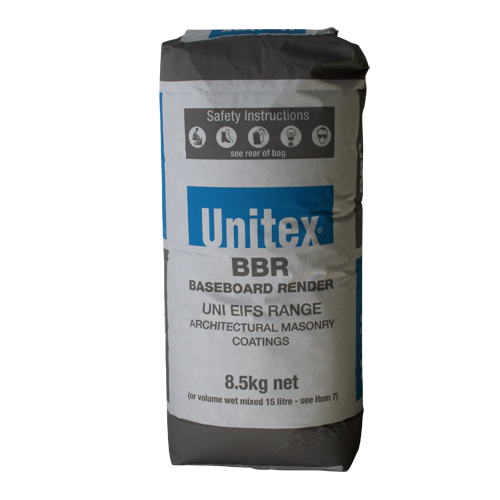
Baseboard systems (EIFS cladding) have their own substrate requirements — the pre-applied render coating on the EPS board is the substrate, and the render and finish coats applied over it must be compatible with the manufacturer’s system specification.
For substrate-specific system specifications and recommended product sequences, refer to the system specifications on unitex.com.au.
Wet vs Dry Render Formulations
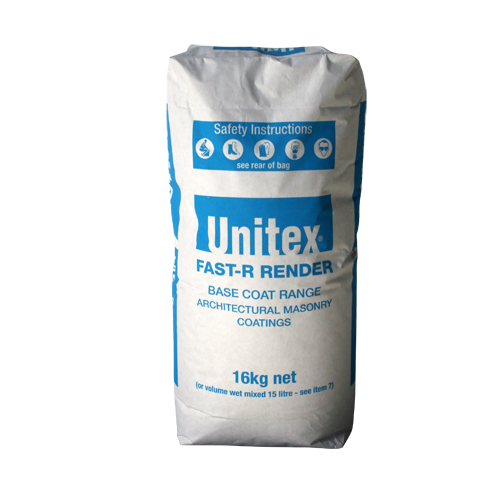
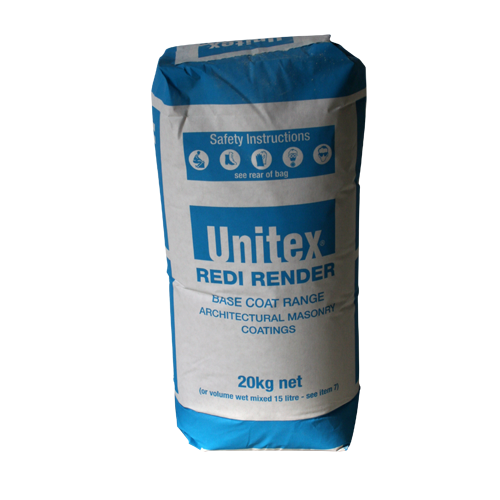
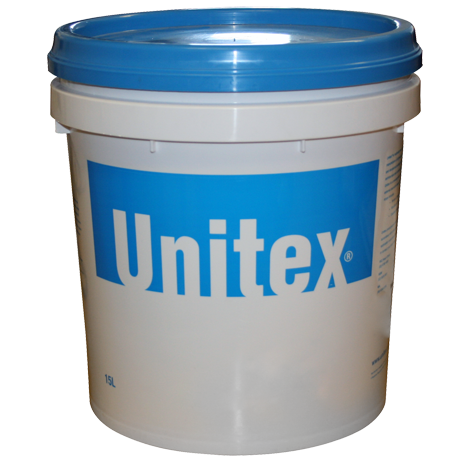
Acrylic base coat renders are available in both pre-mixed (wet) and powder (dry) formulations, each with practical advantages depending on the project context.
Pre-mixed (wet) renders arrive ready to use — with no on-site mixing required. They deliver highly consistent results, reduce the variables introduced by on-site water addition, and suit projects where batch-to-batch consistency is important. Pre-mixed renders do require careful storage and have a shorter shelf life once opened.
Powder (dry) renders are mixed on site with water. They offer longer shelf life and lower transport weight, making them practical for regional supply and larger volume projects. Consistent water-to-powder ratios are important for achieving uniform results across a large render area.
The right choice depends on project scale, site conditions, storage facilities, and the applicator’s preferred working method.
Single-Coat Application Systems
For projects involving clean, low-porosity substrates like new brickwork or AAC panels, single-coat acrylic render systems offer a practical efficiency advantage. A single-coat render is formulated to achieve the required build and surface profile in one application pass, reducing labour time and accelerating the programme to the finish coat stage.
Single-coat systems are not appropriate for all substrates or surface conditions — heavily raked brickwork, uneven surfaces, or substrates with high porosity may require a two-coat approach to achieve the required profile and finish quality.
Application Considerations for Australian Conditions
Australian climate conditions create specific application challenges that affect render system performance. High UV intensity across most of the country accelerates surface degradation in renders that lack UV-stable pigments and binders. Coastal humidity and salt air increase the weathertightness demands on the render system. Extreme temperature cycling in southern and inland regions requires render flexibility to manage the expansion and contraction of the substrate without cracking.
Specifying a render system that has been formulated and tested for Australian conditions — rather than a product developed for European or northern hemisphere climates — is important for long-term performance. Unitex products are manufactured in Australia and developed specifically for the climate conditions and substrate types encountered on Australian projects.
The Unitex Acrylic Render Range
Unitex manufactures a complete range of acrylic and polymer base coat renders covering every common substrate encountered on Australian residential and commercial projects. The range includes wet and dry polymer renders, a non-combustible render for fire-sensitive applications, and the new Aero Render — a single-coat system designed for clean brickwork, blockwork, and AAC panels that simplifies application for all skill levels.
All Unitex render products are manufactured in Australia and designed to work as part of an integrated exterior wall system — with full compatibility across base coat, mesh, finish coat, and sealer layers.
For full product specifications, application rates, and technical data, visit the acrylic render range on unitex.com.au.
Unitex products are available through URW trade outlets in Seven Hills (NSW) and Dry Creek (SA), and through Unitex stockists nationally. Find your nearest stockist, request a quote, or call 1800 RENDER to speak with a Technical Sales Representative.